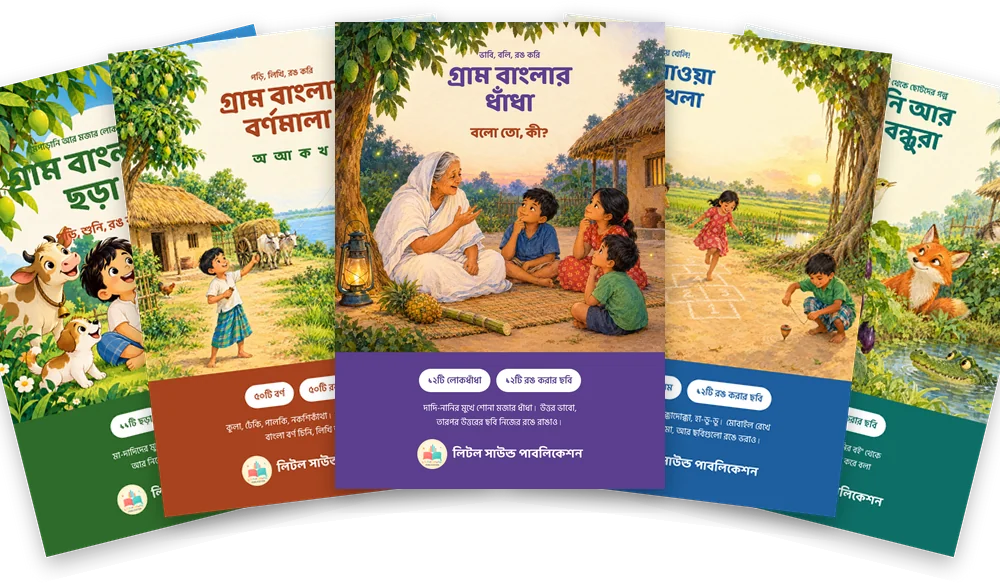
A three-year-old will not sit still for a lesson. He will sit still for a rhyme, if someone he loves is singing it. That is how our mothers taught us. Nobody called it teaching.
তিন বছরের বাচ্চা পড়ার জন্য স্থির হয়ে বসে না। ছড়ার জন্য বসে, যদি প্রিয় কেউ সুর করে গায়। আমাদের মায়েরা এভাবেই শিখিয়েছেন। কেউ সেটাকে পড়ানো বলেনি।
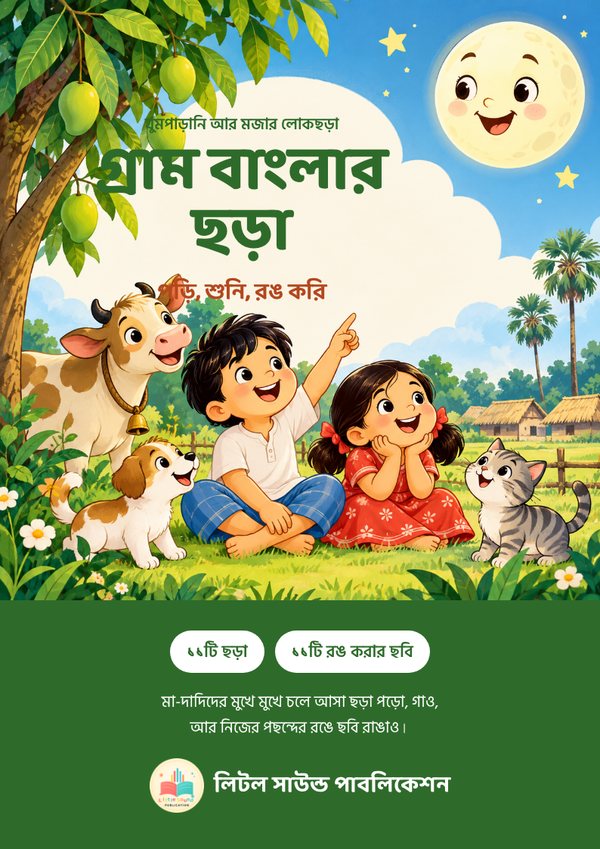
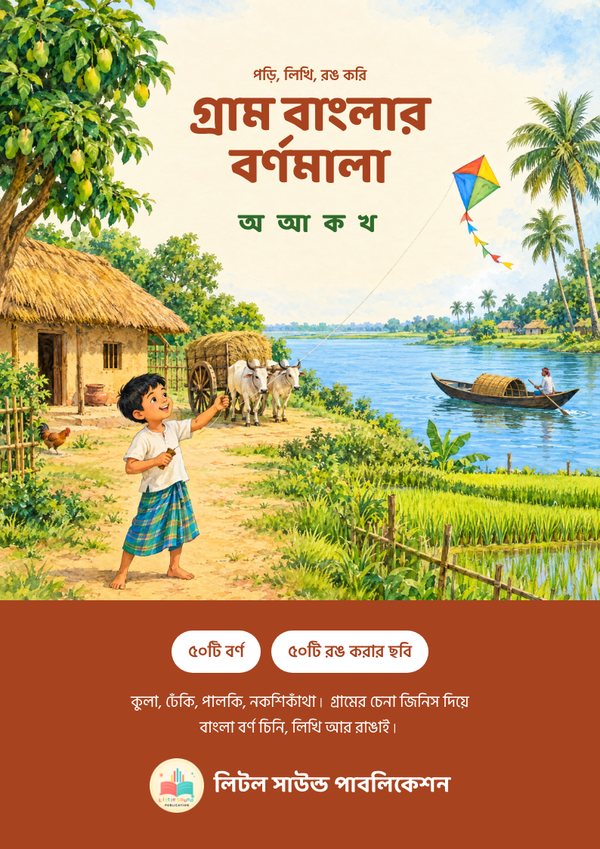
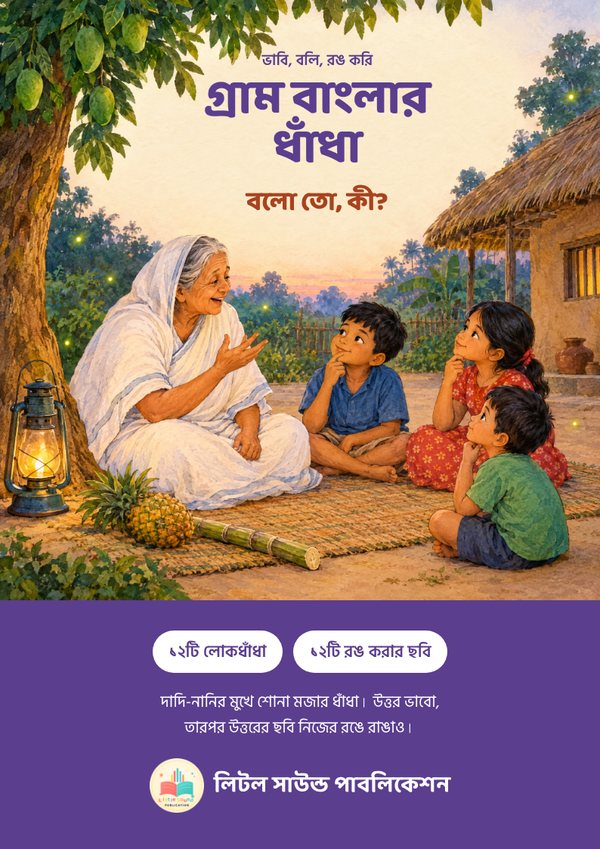
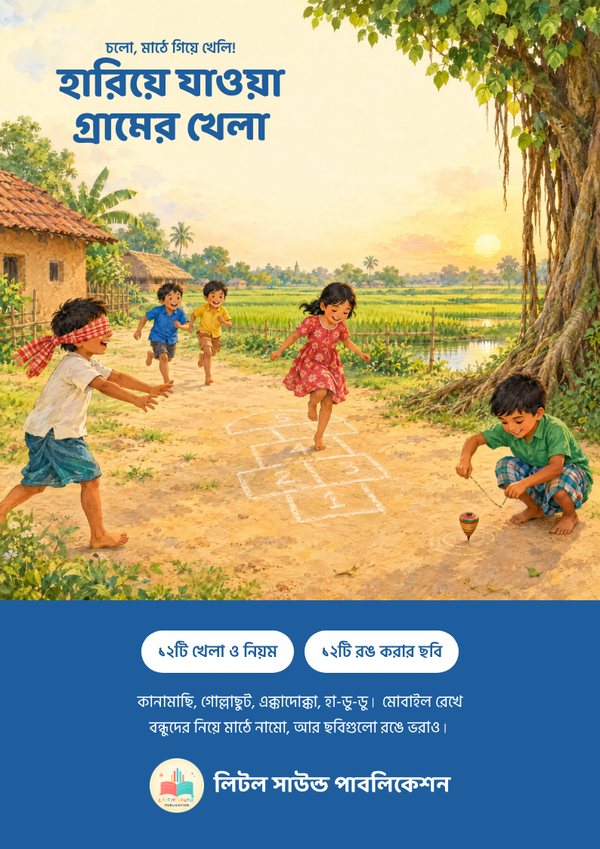
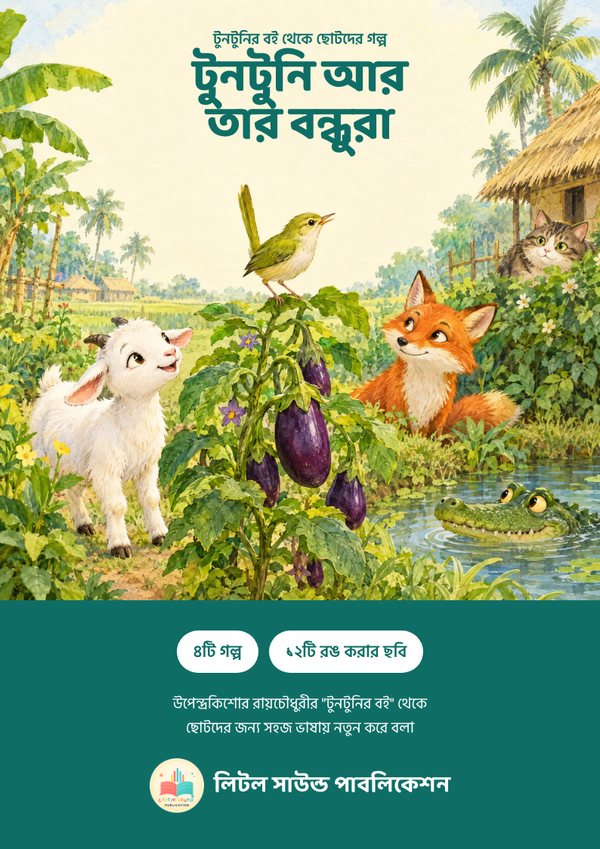
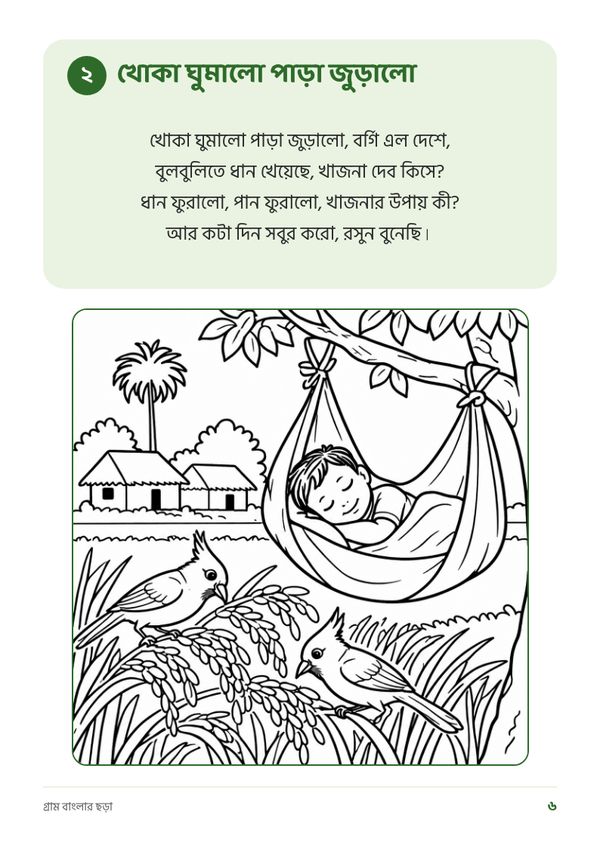
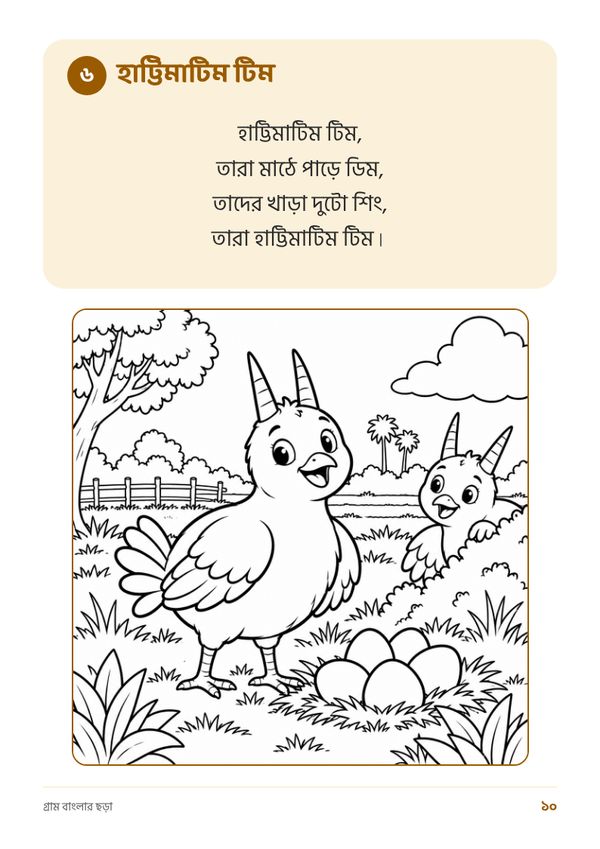
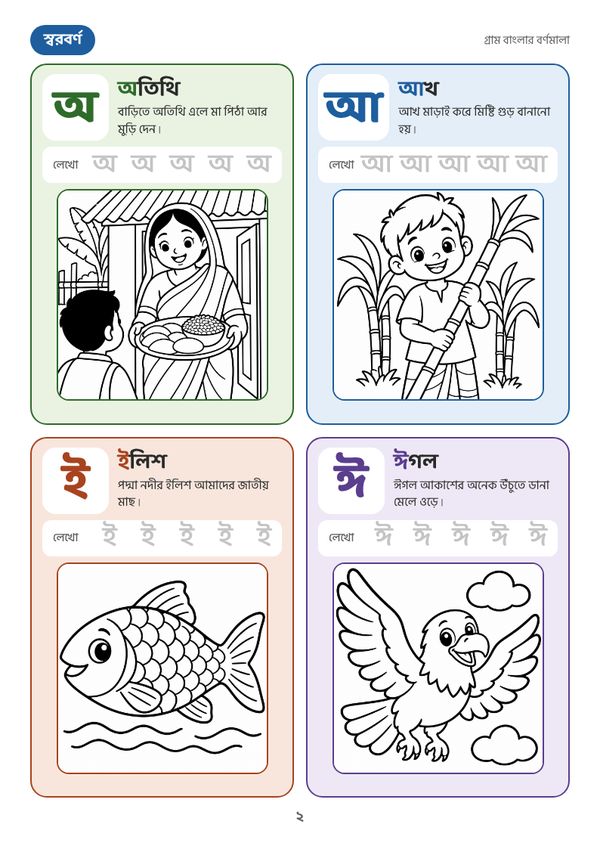
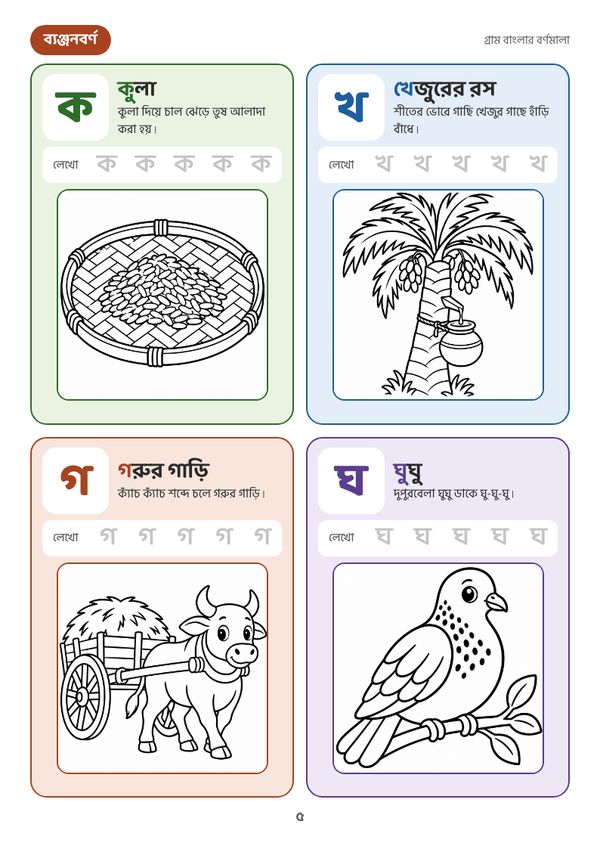
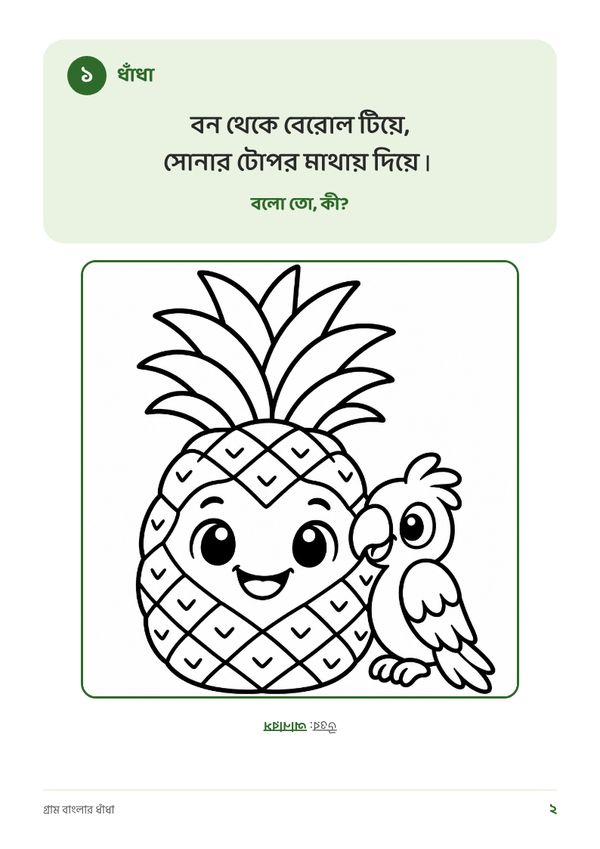
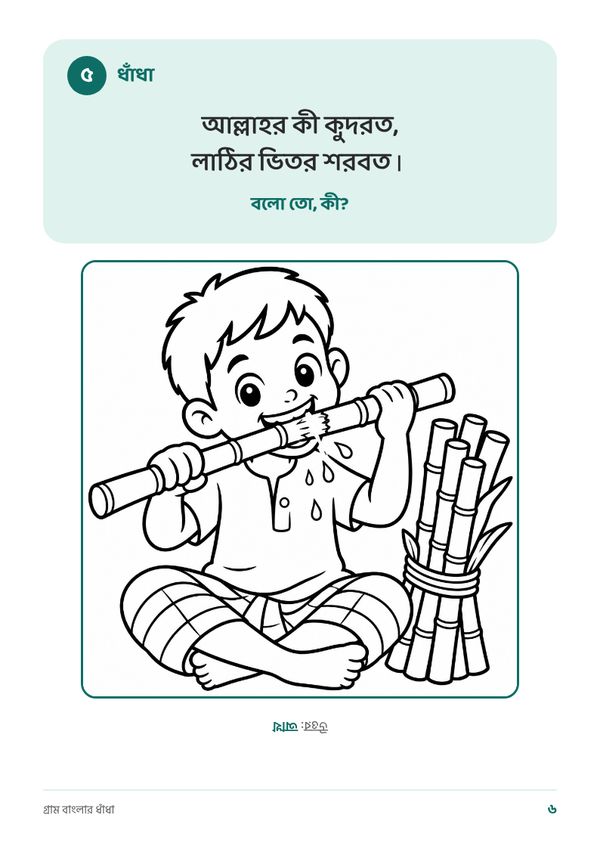
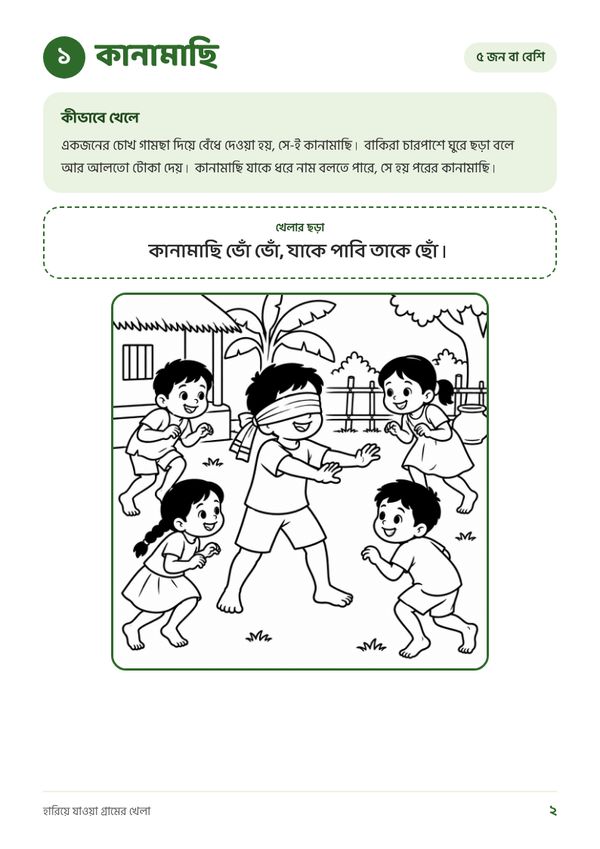
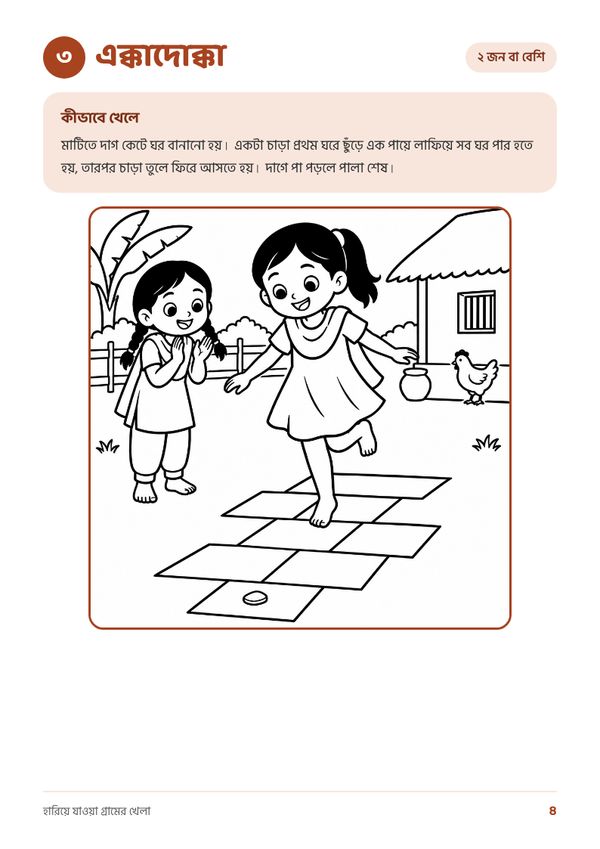
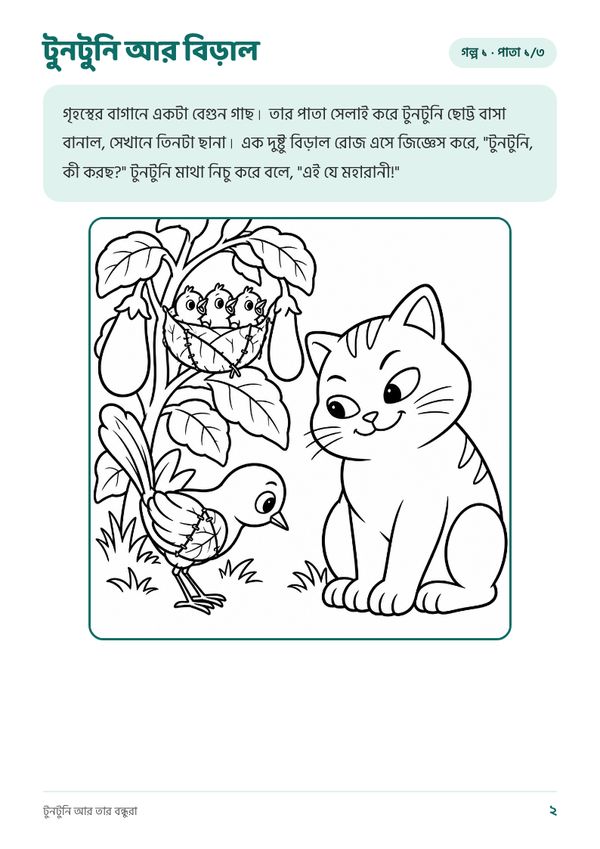
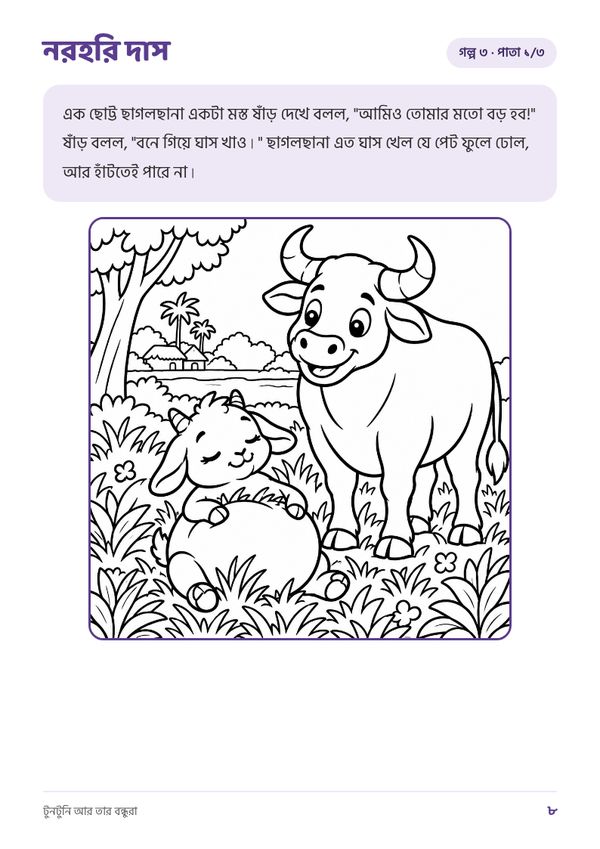
These five books keep that habit. A rhyme, a riddle, a game, a story. Then a big picture with thick lines, made for small hands that do not yet stay inside the lines. They will. Give them a few months.
এই পাঁচটা বই সেই অভ্যাসটা ধরে রাখে। একটা ছড়া, একটা ধাঁধা, একটা খেলা, একটা গল্প। তারপর মোটা দাগের বড় একটা ছবি, ছোট হাতের জন্য, যে হাত এখনো দাগের ভেতরে থাকতে শেখেনি। শিখবে। কয়েক মাস সময় দিন।
Everything in the pictures is from our own villages.ছবির সবকিছু আমাদের গ্রামের।
Dhenki, kula, palki, nakshi kantha, the ghat, the tin-roofed house. A child in Dhaka meets them on paper first. Maybe at the village later.ঢেঁকি, কুলা, পালকি, নকশিকাঁথা, পুকুরঘাট, টিনের চালের ঘর। ঢাকার বাচ্চা এগুলো আগে কাগজে চিনুক। পরে হয়তো গ্রামে গিয়েও।